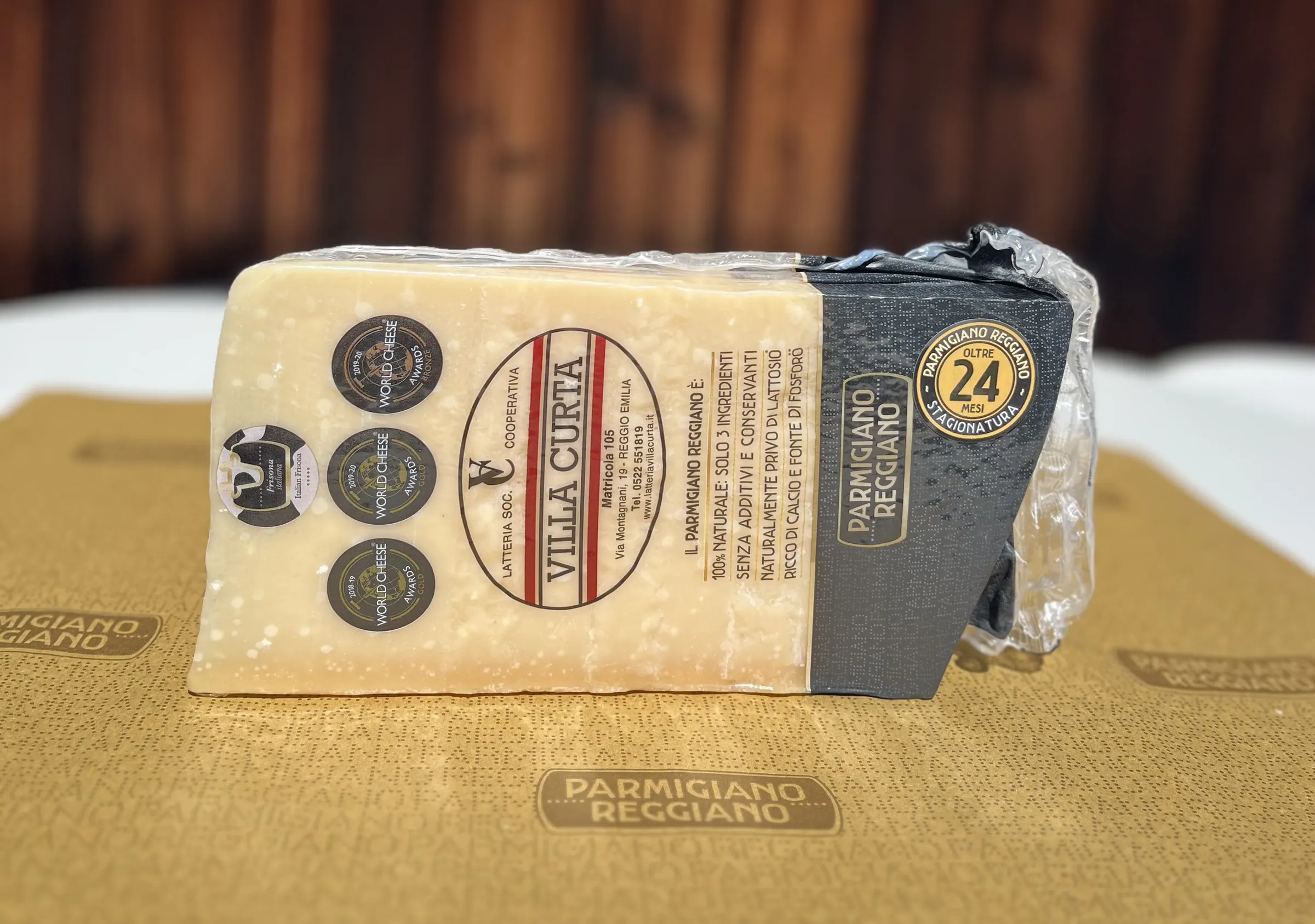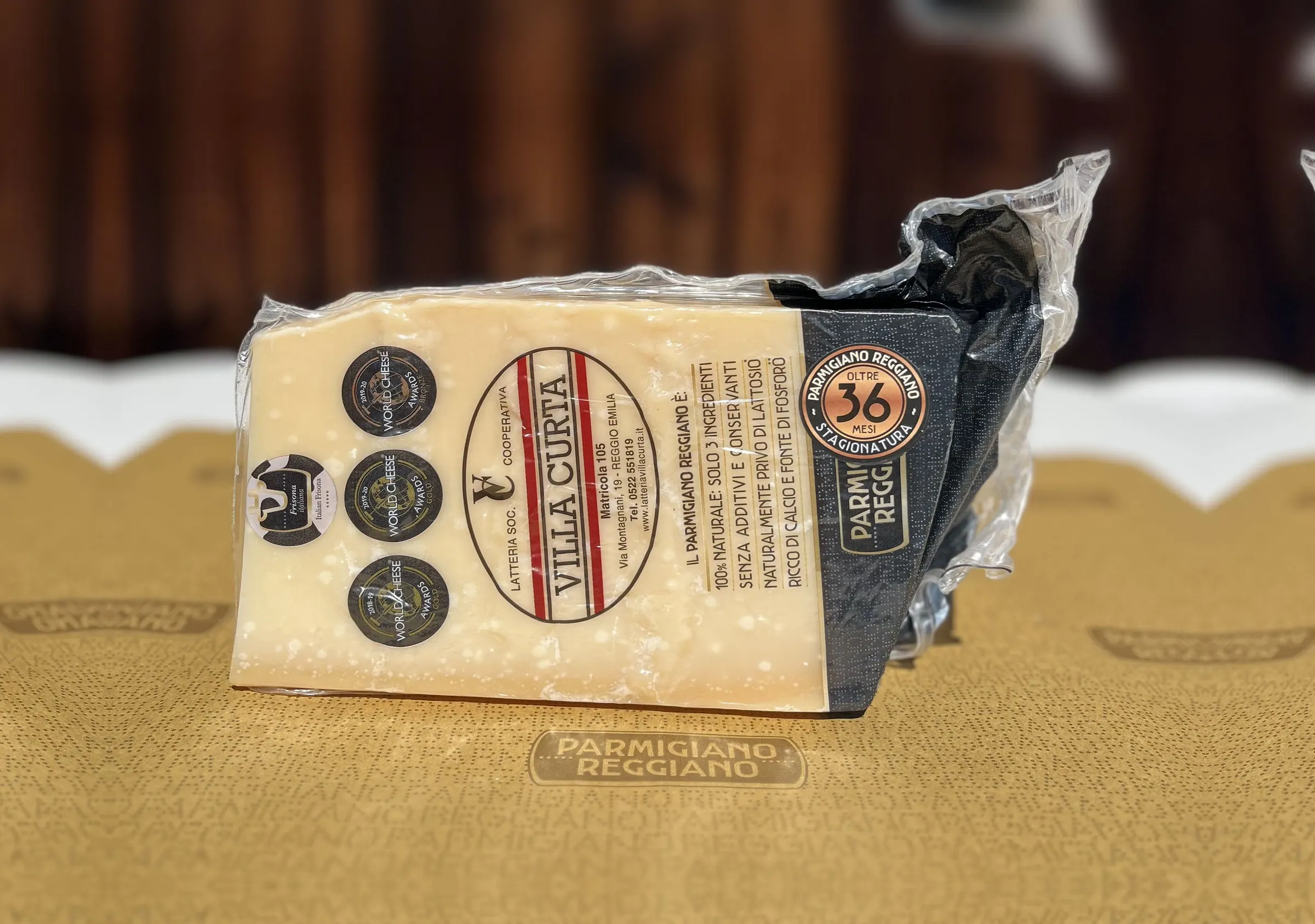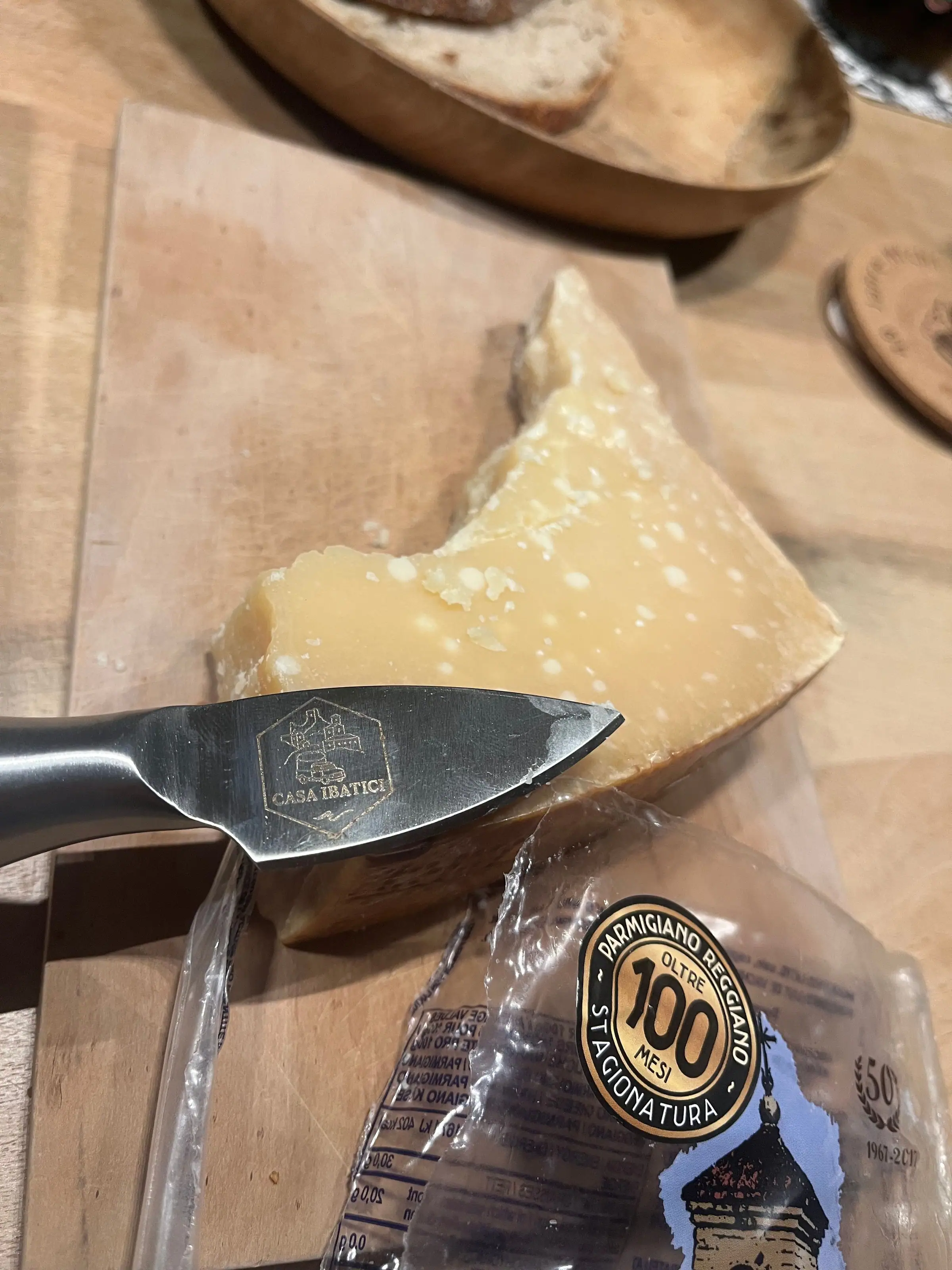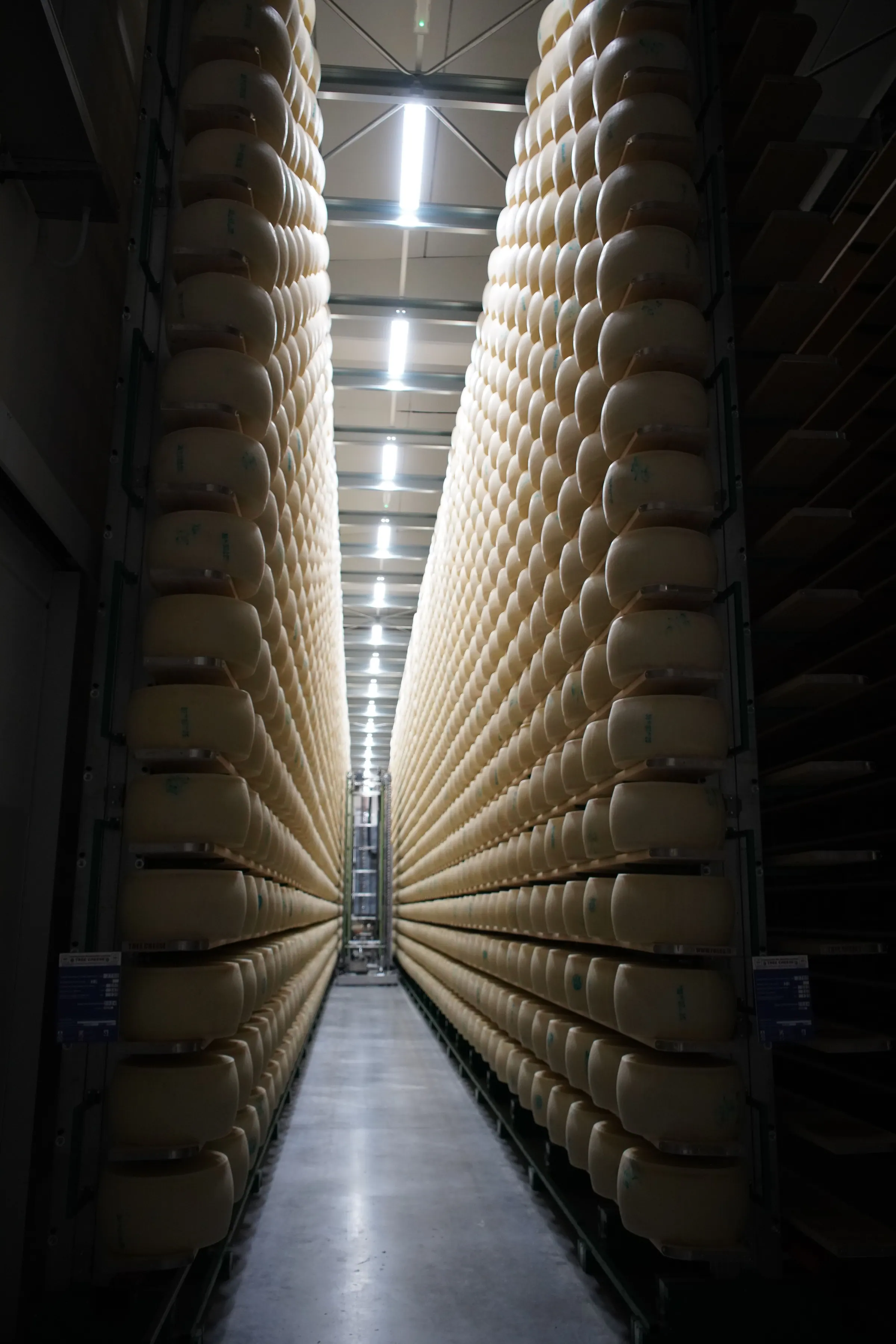
In the supermarket they often sit side by side, and many reach for the cheaper Grana Padano assuming it is “almost the same”. In fact the two cheeses share a common root – medieval monasteries in the Po valley – but differ in almost everything that makes up the taste.
What the cows eat
For Parmigiano Reggiano the cows may eat only grass, hay and a little grain. Silage and fermented feed are forbidden. For Grana Padano silage is allowed – which is why a preservative (lysozyme, E1105, from egg white) may be added. Parmigiano Reggiano contains no additives whatsoever: milk, salt, rennet. Full stop.
Ageing
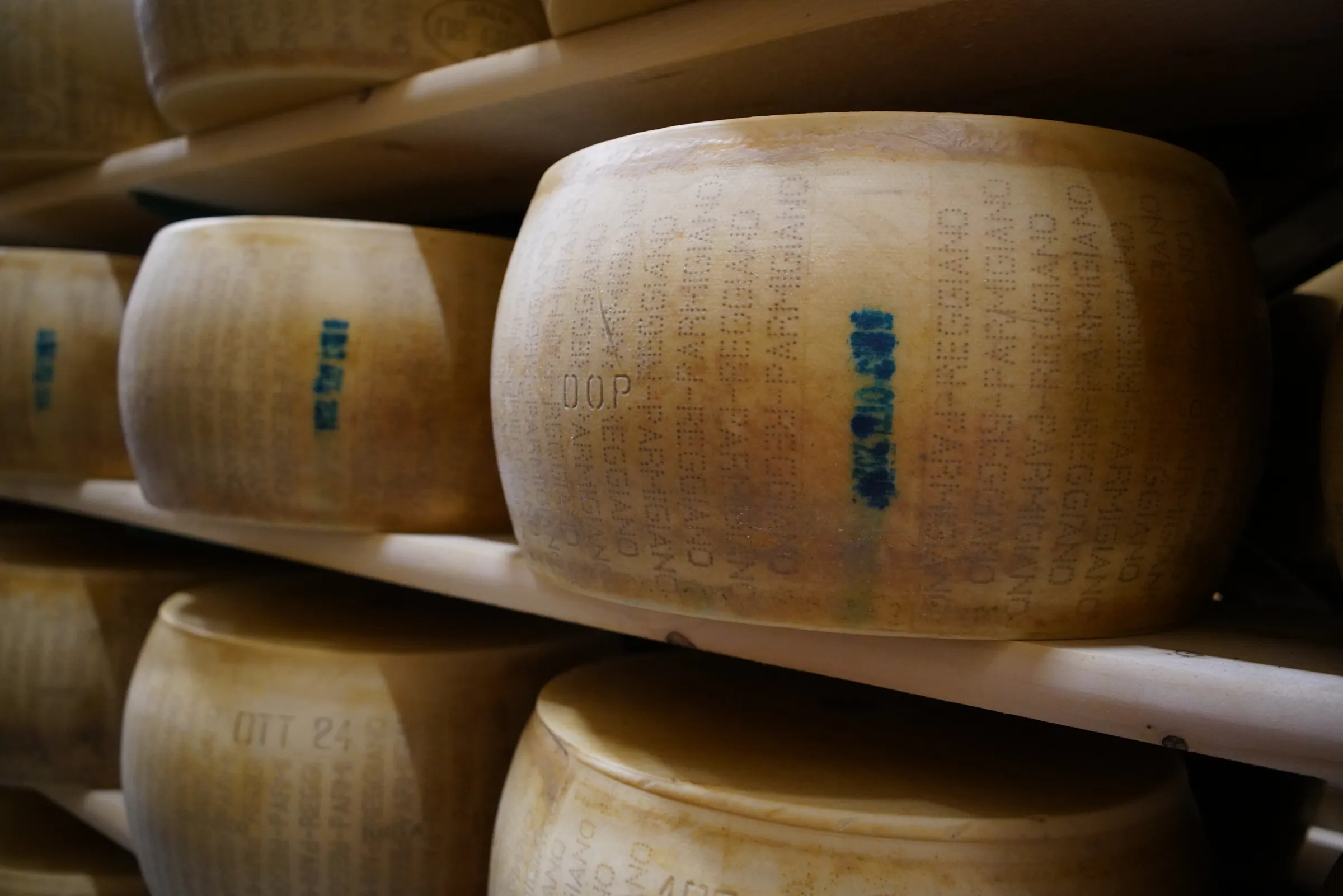
Grana Padano may be sold from 9 months, Parmigiano Reggiano at the earliest after 12 – and most wheels age 24, 36 months or more. The longer ageing produces the typical tyrosine crystals, the intense aroma and the complete breakdown of lactose.
The region
Parmigiano Reggiano comes exclusively from Parma, Reggio Emilia, Modena and parts of Bologna and Mantua. Grana Padano is produced in a much larger area across five regions of northern Italy – in significantly larger, more industrial dairies.
Taste
Grana Padano is milder, softer, a little “simpler”. Parmigiano Reggiano is more complex: nutty, spicy, with a fine sweetness and a long finish – the older, the more intense. Anyone who tastes both side by side – we like doing this at our tastings – never confuses them again.
Verdict: Grana Padano is a decent grating cheese. Parmigiano Reggiano is a cheese to enjoy in chunks – with a drop of balsamic.